SENECA ESPORTS
Scholarship Proposal
Empowering Student Success Through Competitive Gaming
Presented by Lucas Krawczak, Supervisor of Seneca Esports
February 2026
Executive Summary
The Problem: Seneca Esports receives $0 in scholarships while competing against schools investing $2,580/year per athlete on average.
- Funding Gap: 13+ Ontario institutions offer esports scholarships — Seneca does not
- Proposed Investment: $2,500-$5,000 per student athlete (matches provincial average)
- Proven Excellence: National champions and top ECAC rankings with zero support
- Clear ROI: Improves retention, recruitment, and student engagement
Alignment with Your Platform
How esports scholarships advance your priorities:
- Flexible Support: Scholarships reduce financial barriers
- Enhanced Services: Elevates Seneca's competitive offerings
- Inclusivity: Creates pathways for diverse student athletes
- Representation: Recognizes and values esports community
Excellence Despite Zero Funding
All achievements below were earned with $0 scholarship support
- Rocket League: #1 in Division A (ECAC) — competing against funded programs
- Valorant: Top 4 in Division D (ECAC) — outperforming scholarship teams
- PUBG Mobile: National Champions — $6,000 USD prize at PMCC
- Pro-Level Experience: Competed in PUBG Mobile Pro League (PMPL)
Our opponents receive scholarships. Our players pay their own way.
Meet Our Athletes
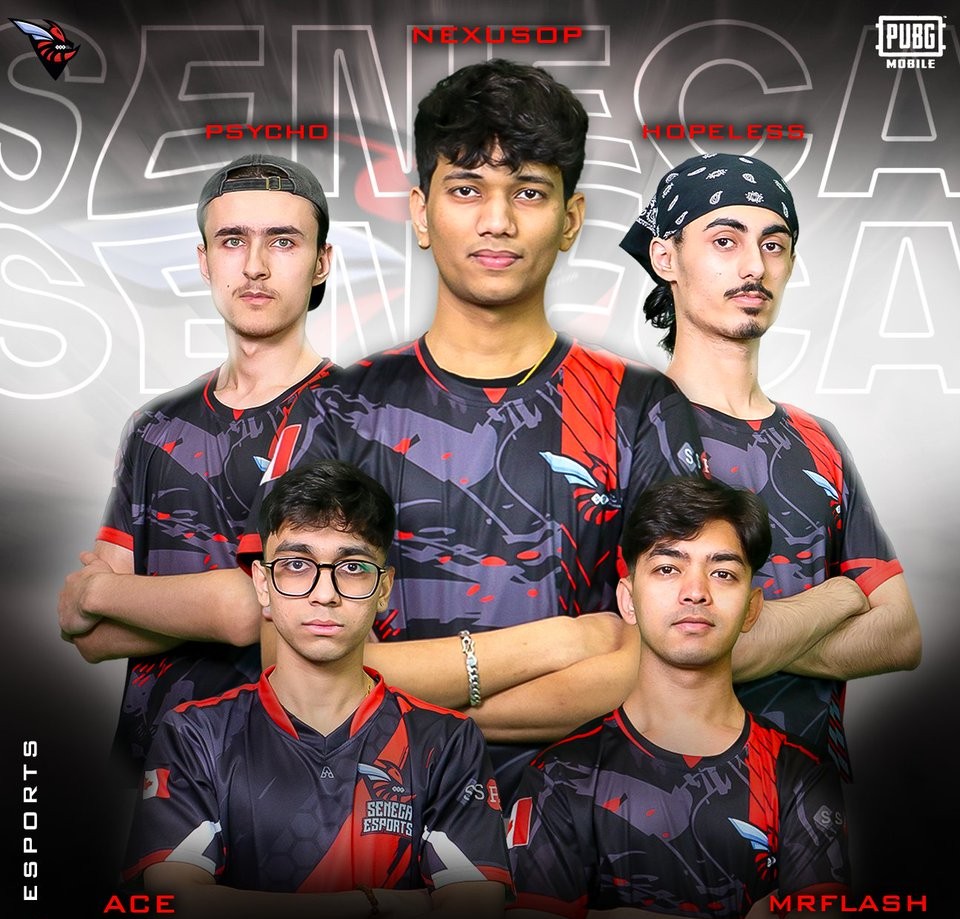
PUBG Mobile — National Champions
Won $6,000 USD at PMCC
.jpg)
Rocket League — #1 ECAC Div A
Top ranked vs funded programs
These athletes deserve the same support as their competitors
The Funding Gap
SENECA ESPORTS
$0
Annual Scholarship Funding
ONTARIO AVERAGE
$2,580
Per Student Athlete / Year
Our athletes compete at the highest level with zero institutional support
What Other Schools Invest
- St. Clair College: $1,000-$4,000/year — formal varsity structure with scholarship tiers
- uOttawa: $2,500 annual scholarship for esports athletes
- Lambton College: $2,500-$5,000 via provincial funding allocation
- Georgian College: $50,000+ total distributed in 2022-23
- NorQuest College: Up to $800/year program stipend
Seneca: Currently offers $0 in esports scholarships
Top 3 Funded Programs
St. Clair College
Full varsity structure with Saints Academy pipeline
$500-$2,000/semester
Rank-based scholarship tiers
UBC Esports
Dedicated practice space + institutional support
Entrance Awards
+ Service/leadership awards
Georgian College
Ontario Esports Scholarship pathway
$50,000
Total earned in 2022-23
Seneca has no equivalent program — our students compete unfunded
Same Results, Zero Support
Schools with similar competitive rankings invest significantly:
ST. CLAIR
$4,000/yr
Varsity scholarships
UBC
Entrance Awards
+ service awards
SENECA
$0
No support
Imagine what we could achieve with proper investment
Evidence-Based Benefits
Research from 12 US universities shows esports participants:
- Average GPA of 3.38, with 13% achieving perfect 4.0
- 65% are STEM majors, supporting academic diversity
- Over 50% report increased desire to remain at university
- Develop teamwork, leadership, and communication skills
Strategic Value for Seneca
- Recruitment: Attracts high-performing students to Seneca
- Retention: Students stay engaged and complete programs
- Engagement: Creates vibrant campus community and school spirit
- Differentiation: Positions Seneca as esports leader in GTA
Proposed Scholarship Structure
Tier 1: Elite Athletes
$4,000-$5,000/year for national-level competitors
Tier 2: Varsity Players
$2,000-$3,000/year for active varsity team members
Year 1 Pilot Program Budget
- 3 Elite Athletes: $13,500 (3 × $4,500)
- 7 Varsity Players: $17,500 (7 × $2,500)
- Total Investment: $31,000 for 10 student athletes
- Targets top performers in Rocket League, Valorant, and PUBG
Potential Funding Sources
- Ontario Esports Scholarship: Provincial program available
- SSF Enhancement Fund: Student services investment
- Corporate Sponsorships: Gaming industry partnerships
- Alumni Donations: Dedicated esports advancement fund
Implementation Roadmap
- March 2026: SSF approval and funding commitment
- April 2026: Develop scholarship criteria and application
- May-June 2026: Application period and selection process
- September 2026: First cohort begins academic year
Measuring Success
Year 1 evaluation criteria:
- Scholar retention rates and academic performance (GPA)
- Competitive tournament results and rankings
- Student satisfaction and community engagement
- Program visibility and recruitment impact
Recommended Next Steps
- Present proposal to SSF Board for funding approval
- Connect with provincial Ontario Esports Scholarship program
- Engage Seneca administration for institutional support
- Develop scholarship criteria with input from esports community
Thank You, SSF
Together we can elevate student success through esports
Let's make Seneca a leader in competitive collegiate gaming
Lucas Krawczak | Supervisor, Seneca Esports
Available for discussion at your convenience